


Introduction
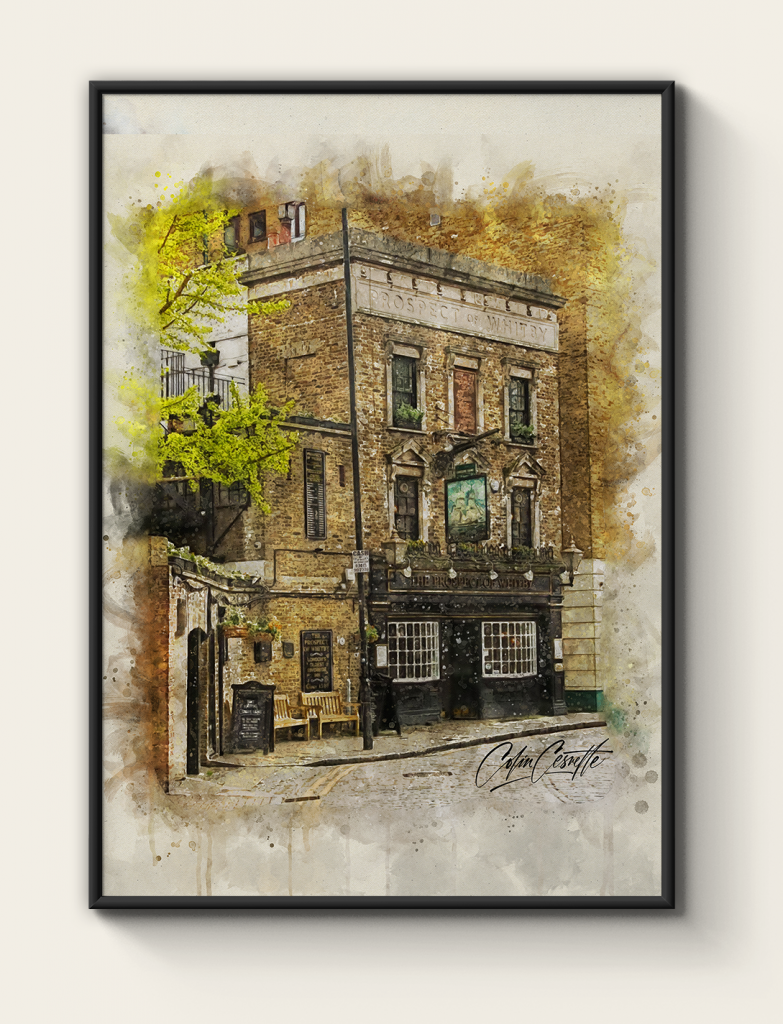
Some artwork commands attention through vibrant colour and dramatic energy. Others invite a slower connection through atmosphere, heritage, and memory. The Prospect of Whitby belongs firmly to the latter.
This piece captures one of London’s most historic public houses, standing proudly beside the River Thames. For centuries, sailors, merchants, writers, and travellers have passed through its doors. As a result, the building has become more than a landmark; it has become part of London’s living story.
Rather than focusing on moving the city, this artwork celebrates permanence. It reflects a place where history remains visible within weathered brickwork, traditional architecture, and the muted character of old London.
The Moment Behind the Piece
Inspiration for this artwork came from the enduring charm of historic English pubs. The Prospect of Whitby stood out through its rich textures, riverside setting, and unmistakable sense of age.
Unlike modern buildings, historic landmarks often reveal their stories. Every brick, window, and worn surface suggests a connection to the people who once gathered there. The focus of the composition became the building itself rather than the surrounding activity.
When there are no crowds, the structures themselves become the focus. Meanwhile, the warm brick tones and subtle shadows create a sense of familiarity and nostalgia. Together, they evoke memories of traditional London and the heritage that still survives along the Thames.
Building Texture and Atmosphere
This artwork combines traditional watercolour influences with modern digital techniques. Layered washes, textured pigments, and delicate splashes help create depth while maintaining a soft, painterly quality.
Simultaneously, architectural details remain important. The aged brickwork, decorative features, and historic signage provide structure and authenticity. However, the intention was never strict realism alone.
Instead, the goal was to create an atmosphere. Soft edges and muted tones allow the scene to feel remembered rather than simply observed. As a result, the artwork carries a sense of reflection, inviting viewers to imagine the stories held within its walls.
Why Historic Landmarks Matter
Historic buildings connect us to the people who came before us. They preserve culture, identity, and shared experiences that might otherwise fade with time.
The Prospect of Whitby is one such place. As one of London’s oldest riverside pubs, it represents resilience, continuity, and the enduring character of the city. Therefore, preserving these landmarks through art becomes more than an aesthetic exercise; it becomes a celebration of history itself.
In a fast-moving world, heritage sites encourage us to slow down. They remind us that every building has a story, and every street holds memories. Through artwork, those stories remain visible, allowing future generations to appreciate the beauty, craftsmanship, and history woven into England’s historic landscape.

